An instrument that grows its own music.
Spore is a battery-powered generative synth the size of a paperback: thirteen knobs, a touch keyboard, a round display, and a Daisy Seed inside. It's open hardware, and it isn't finished. Follow along while it gets built.
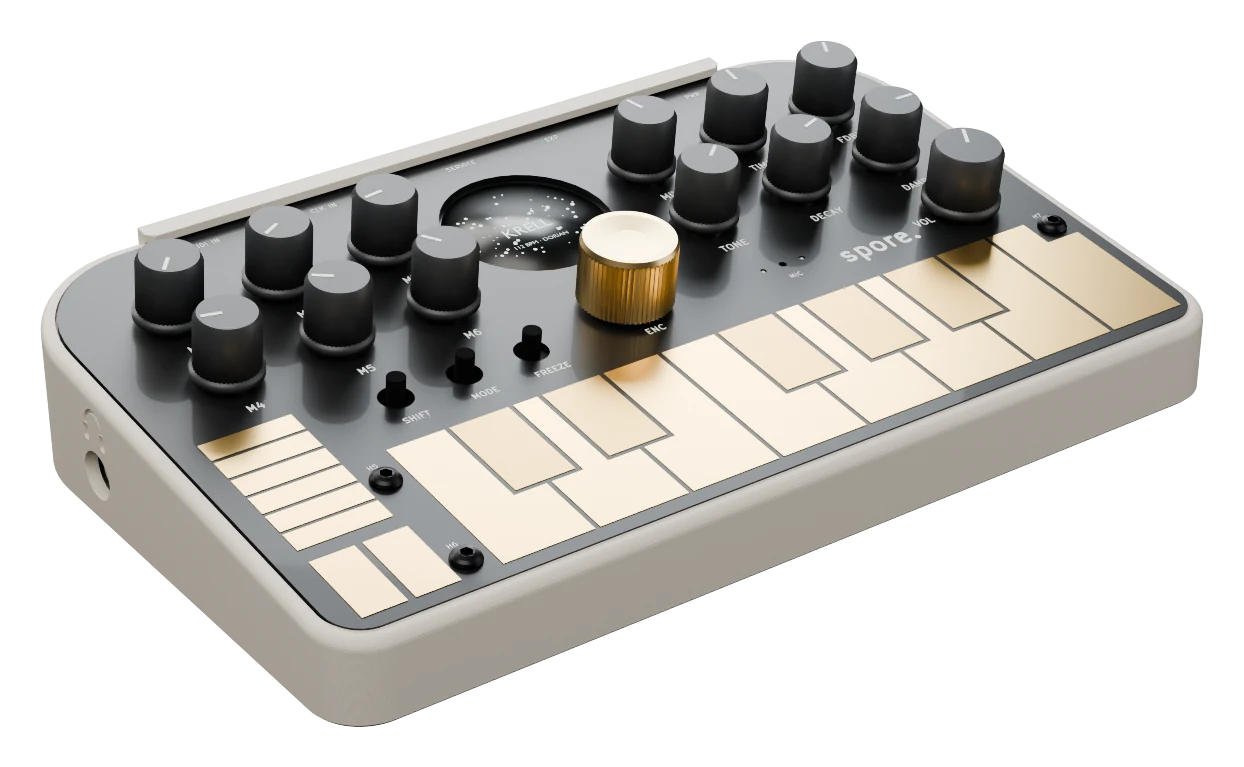
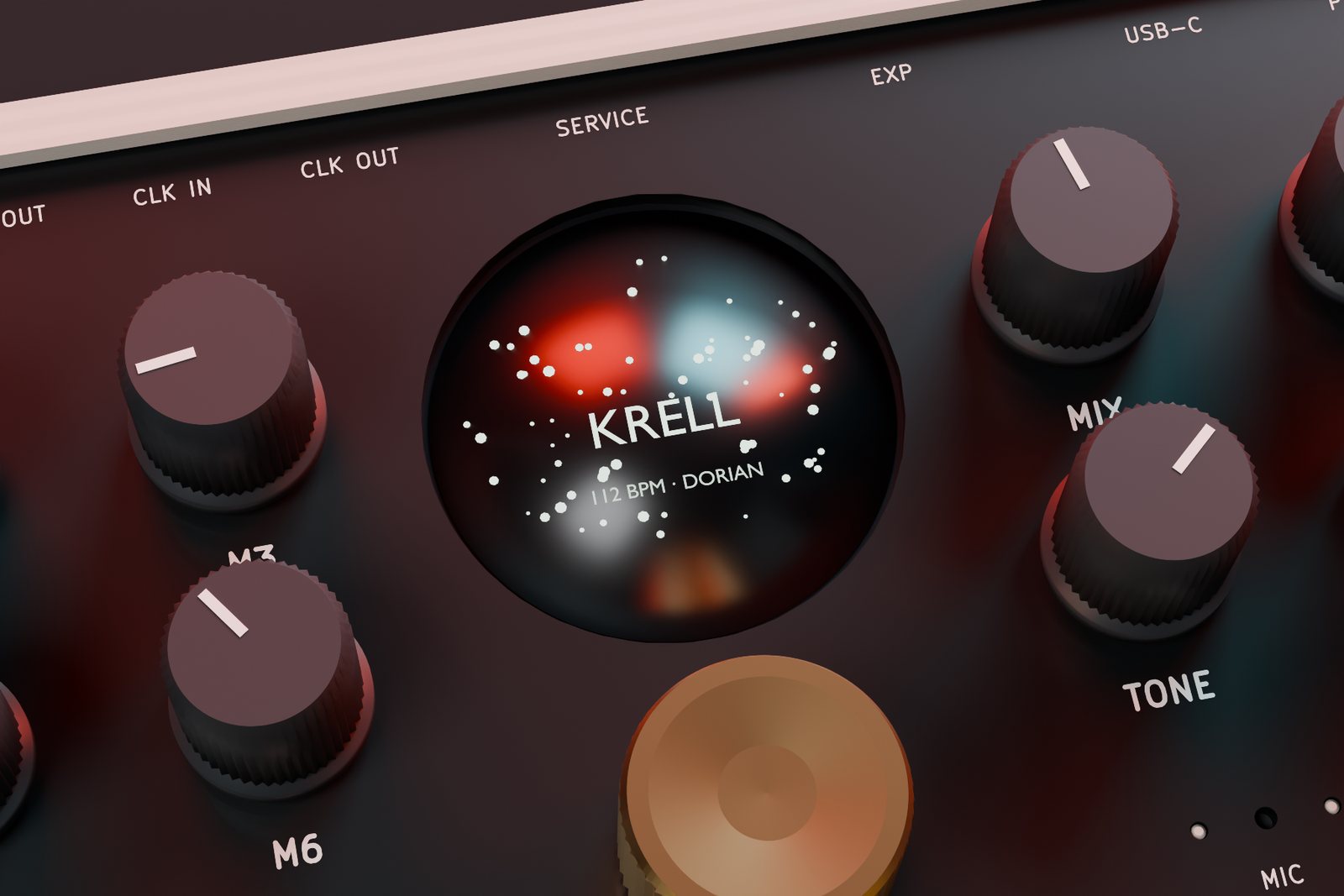
The screen shows what you touch
A 1.28″ round display in the middle of the panel: the mode and tempo, the knob you just turned, and the sound's level rising up both sides.
Three boards and a printed shell
The gold keys aren't parts sitting on a panel. They are the circuit board itself: bare copper you play with your fingertips.
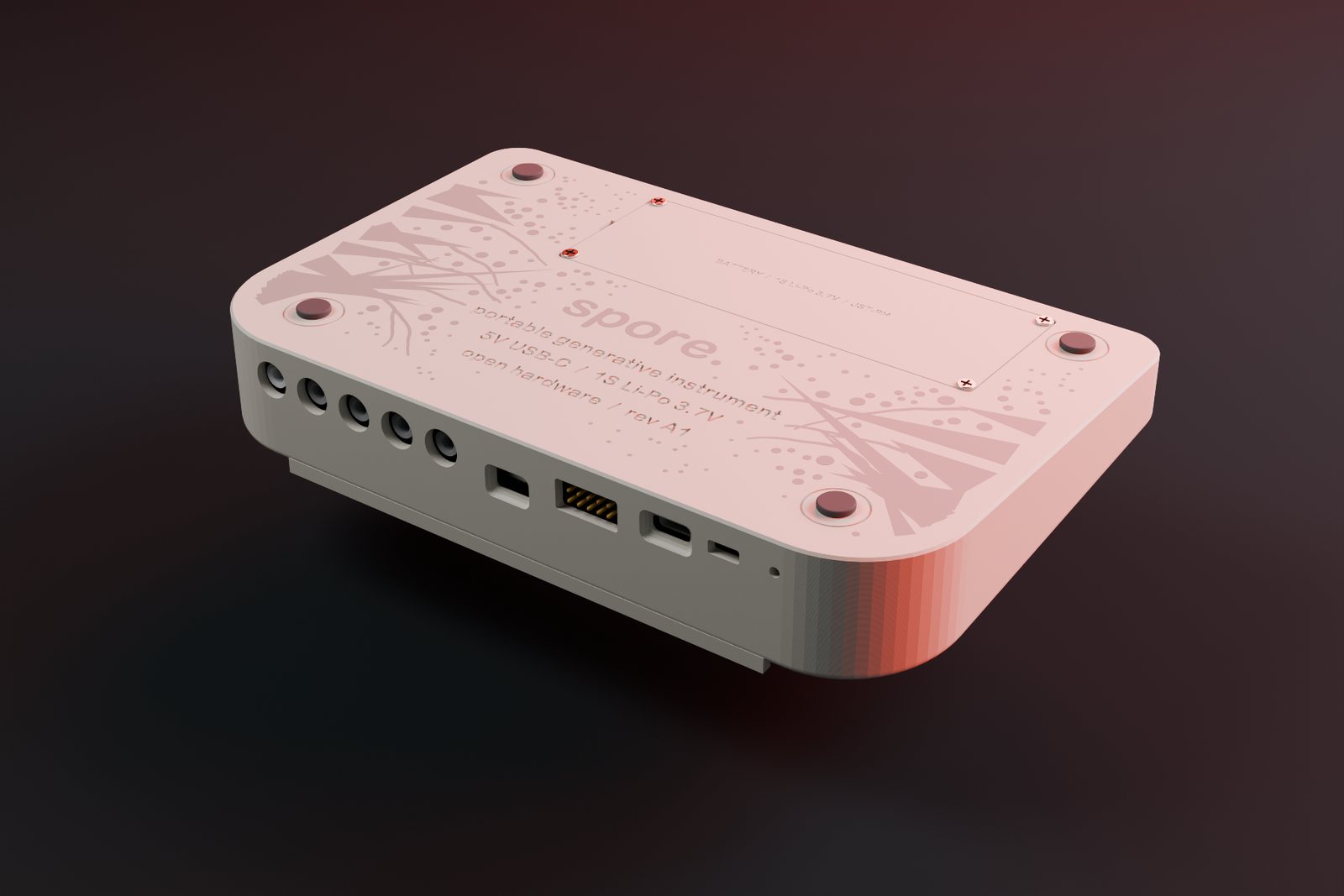
Under it sits a second board that carries the knobs and the display, and below that the core, with the audio brain, the battery charger and every socket. One flat cable joins them.
- Sound Daisy Seed, 24-bit stereo
- Hands 13 knobs, 13 keys, a bend strip
- Power Rechargeable cell, USB-C
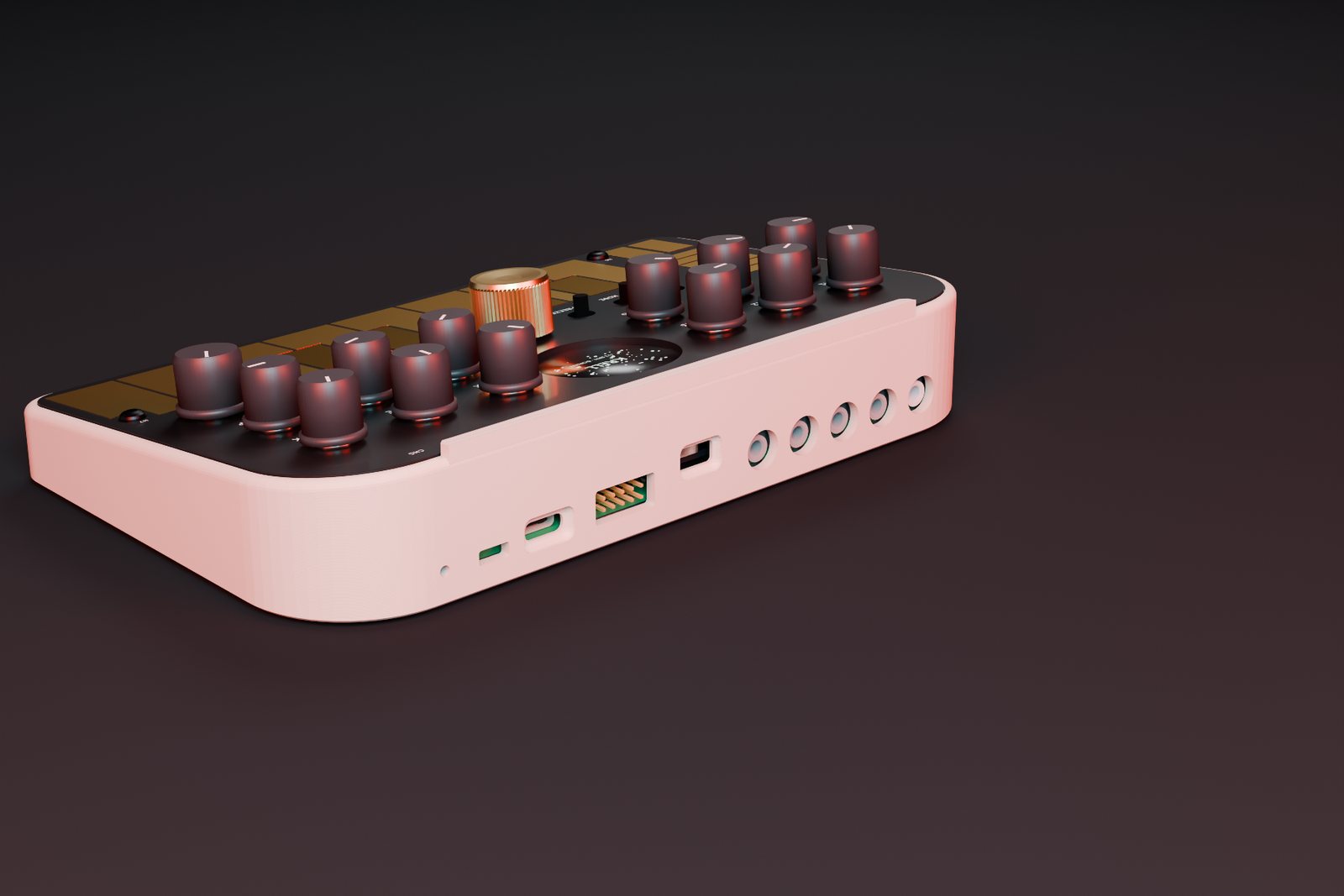
- Wires Headphones, line in, a built-in mic, MIDI, clock
From every side
These are renders from the design files, not photographs. Photos replace them the day the first unit exists.
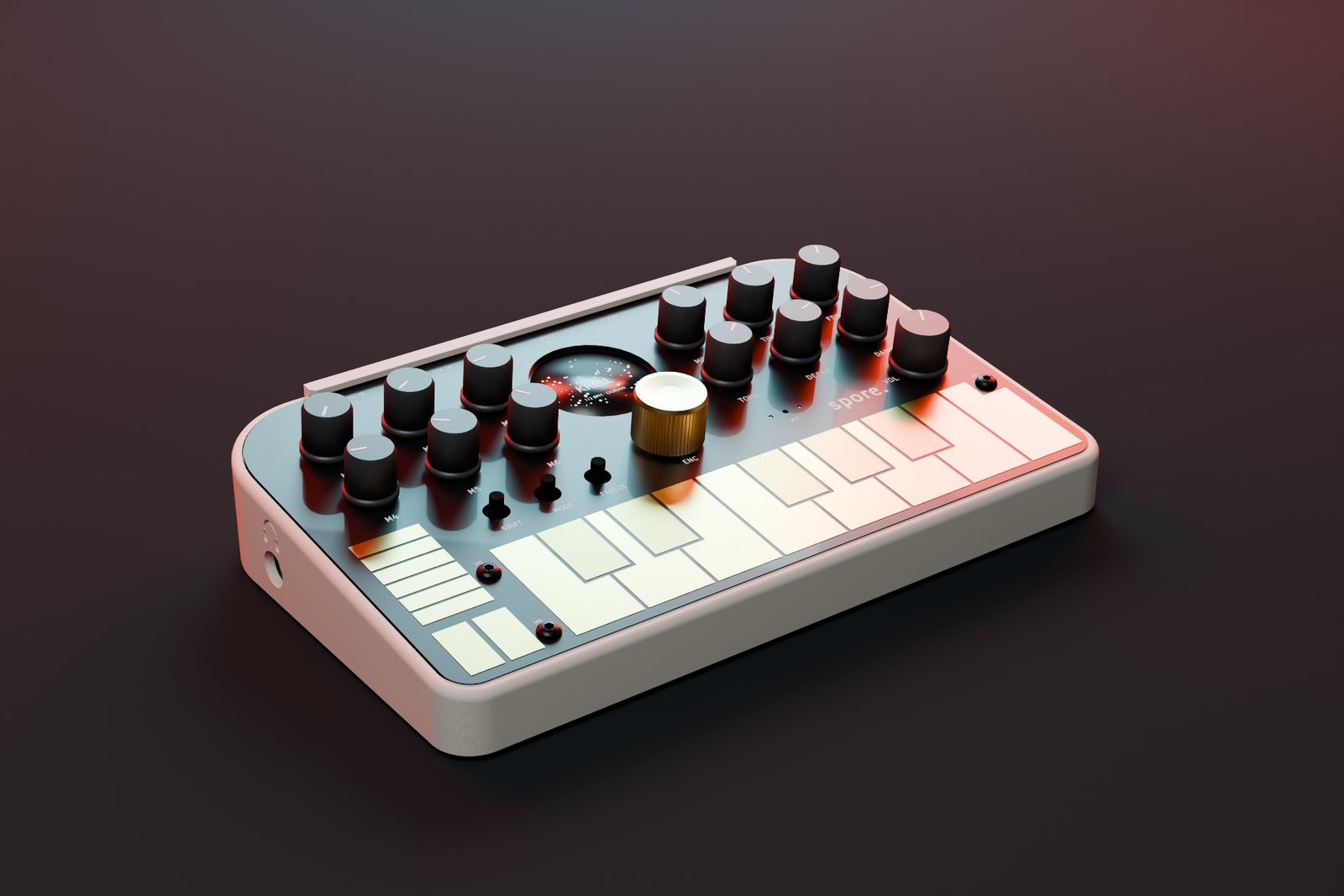
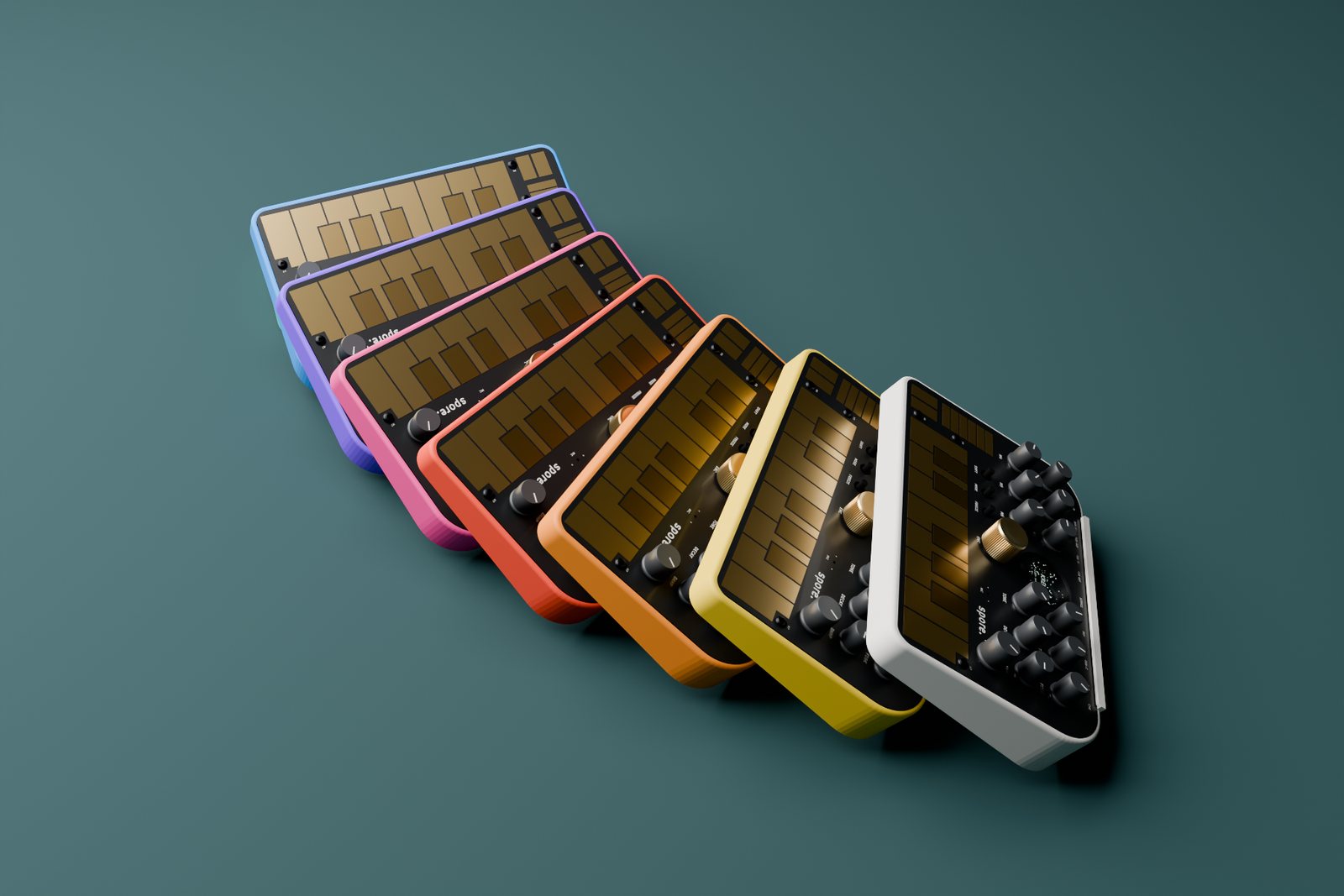
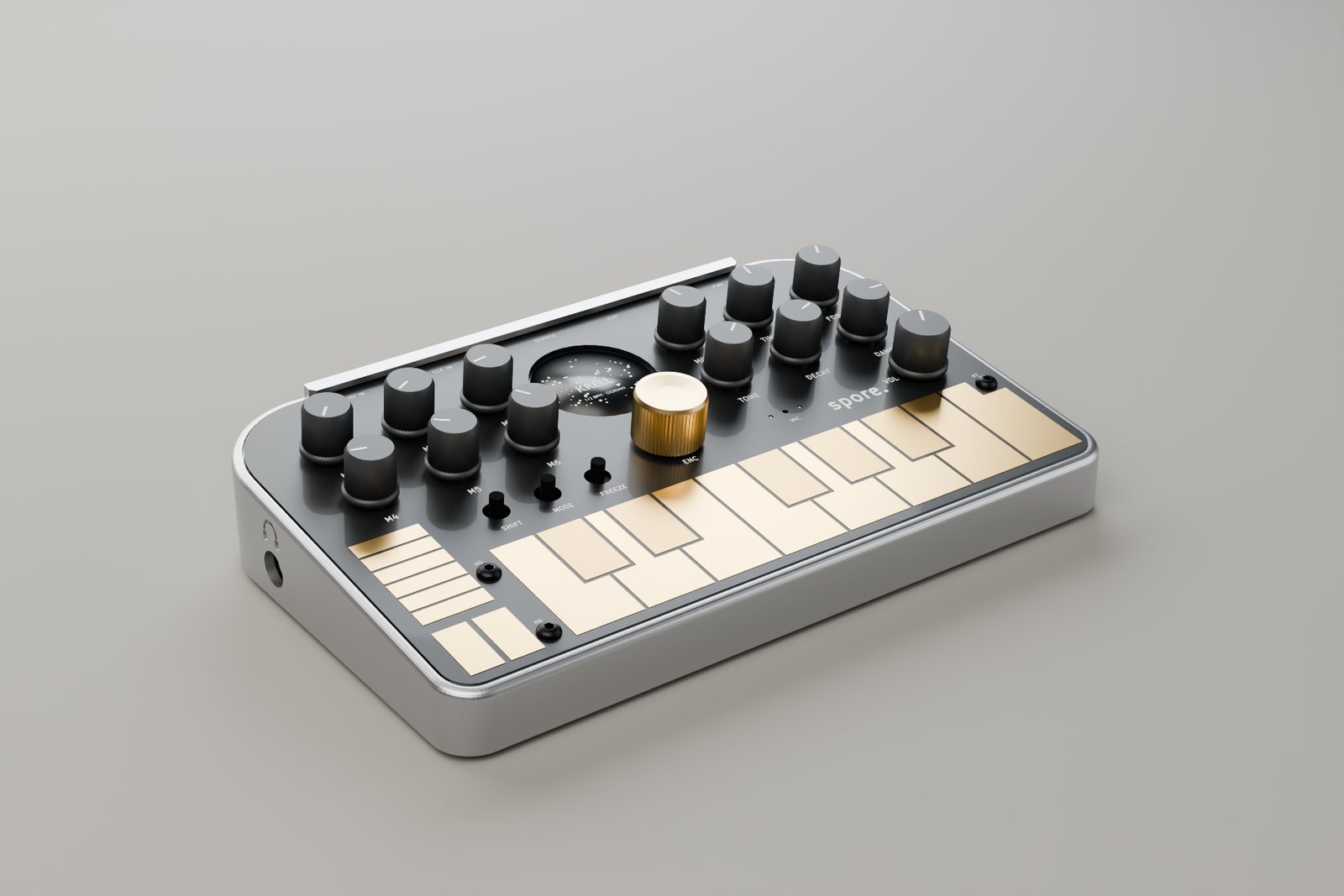
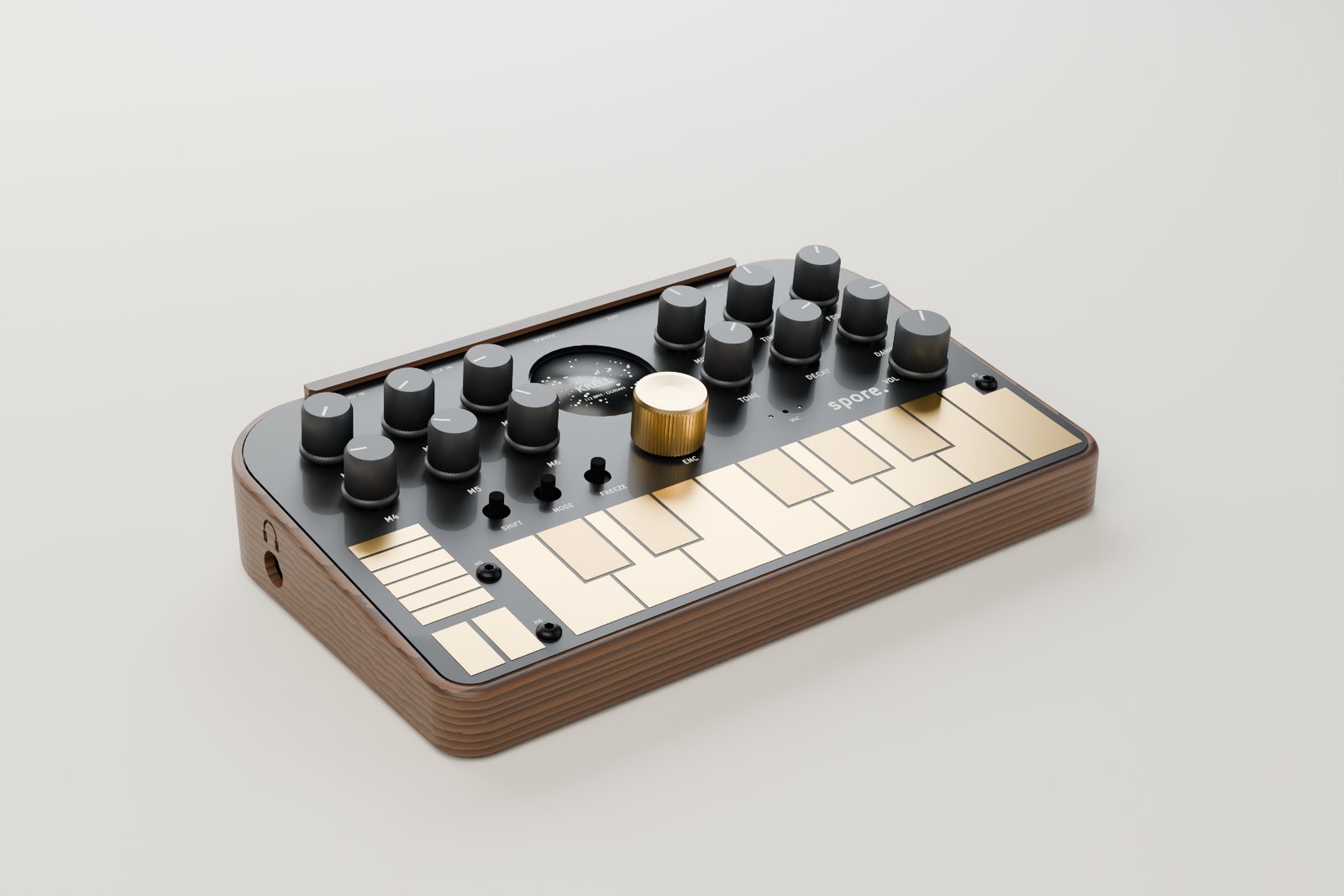
Finishes
Studies for the shell. The printed base can take any colour; anodised aluminium and walnut are ideas we're exploring.
Where it is now
Designed
All three circuit boards are drawn, and every chip has been checked against its datasheet.
First prototypes
Waiting for the first boards. When they arrive, one unit gets soldered, put in its printed shell and powered up for the first time.
First sound and software
Write the code for the sound engine, the display, the touch keys and the knobs, until it plays.
Propagator
Connect Spore to Propagator, the browser editor: patches and parameters from your laptop, over USB.
Public evaluation
Put units in players' hands and listen to what they say.
Get the next update
An email goes out when a step above is finished, or when something goes wrong in an interesting way.